Meeting Room

Get creative where others go on holiday

A boutique setting that fosters creativity and togetherness – right in the Alps.

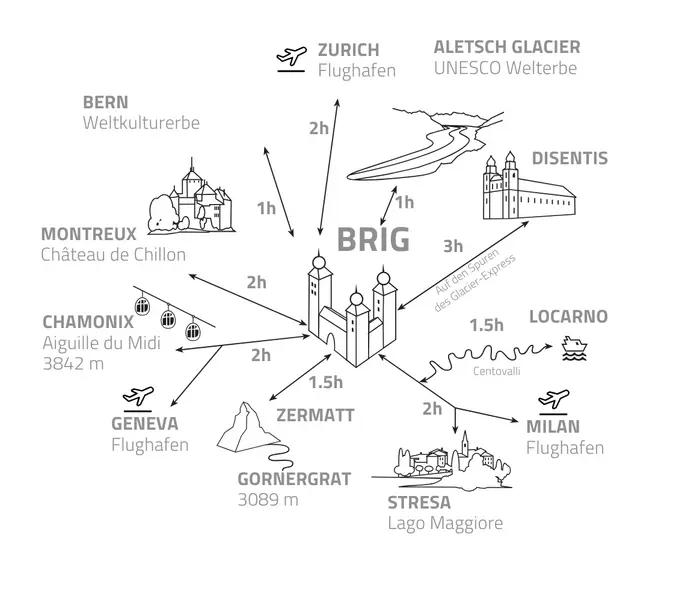
Brig is centrally located – you can reach us from anywhere in Switzerland in less than two hours. Just a few steps from the train station, our house offers an inspiring environment for meetings, workshops, and business events of all kinds. All around: the Valais Alps. Perfect for outdoor group activities – on the mountain, by bike, or in the vineyards. And for those who prefer enjoyment over effort: Culinary specialties, wine & convivial moments in the Rhône Valley – Switzerland’s largest wine region.


Whoever plans a retreat should first ask the right questions.

Our PDF “Q&A Business Retreat” helps with exactly that.


Where meetings become personal

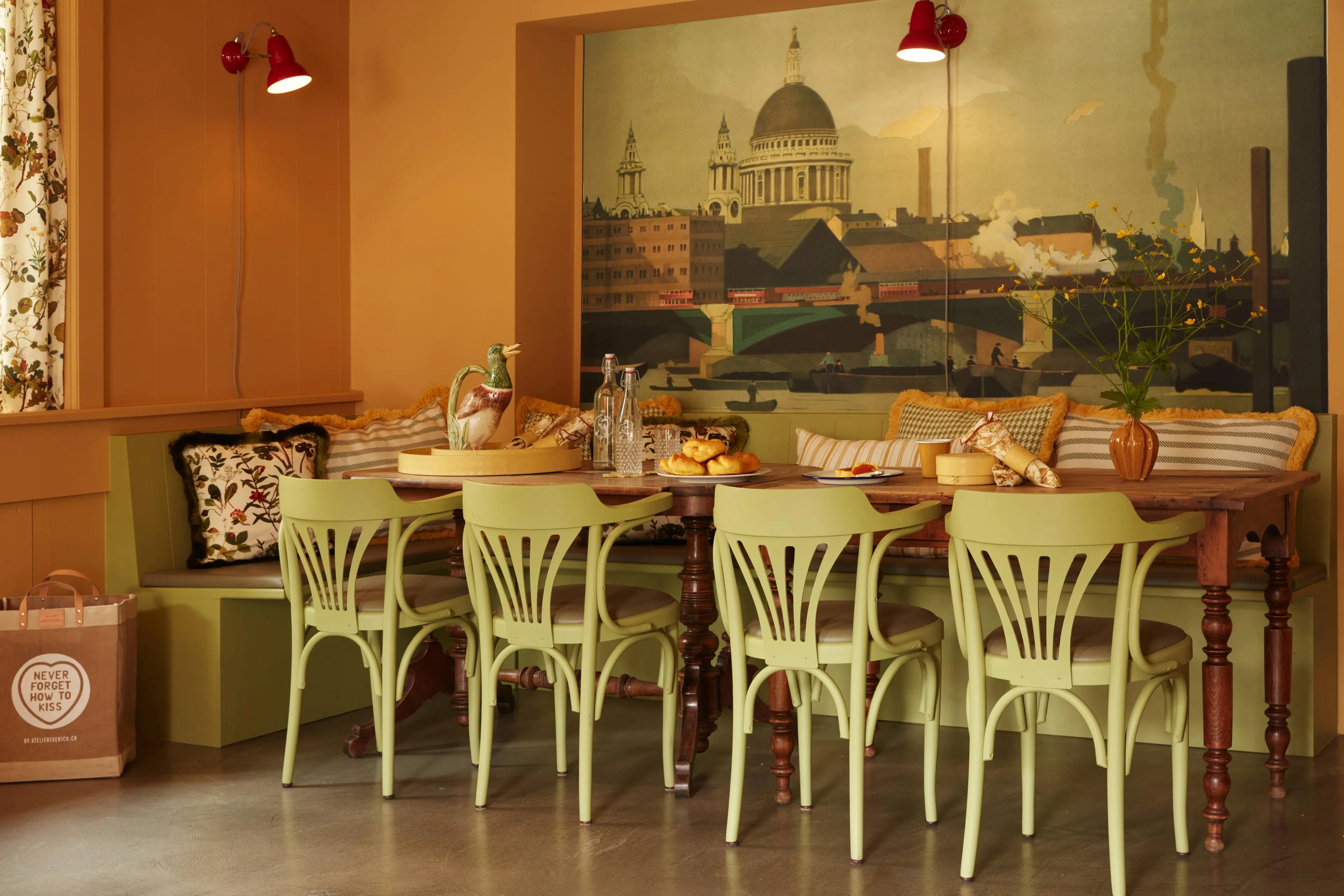
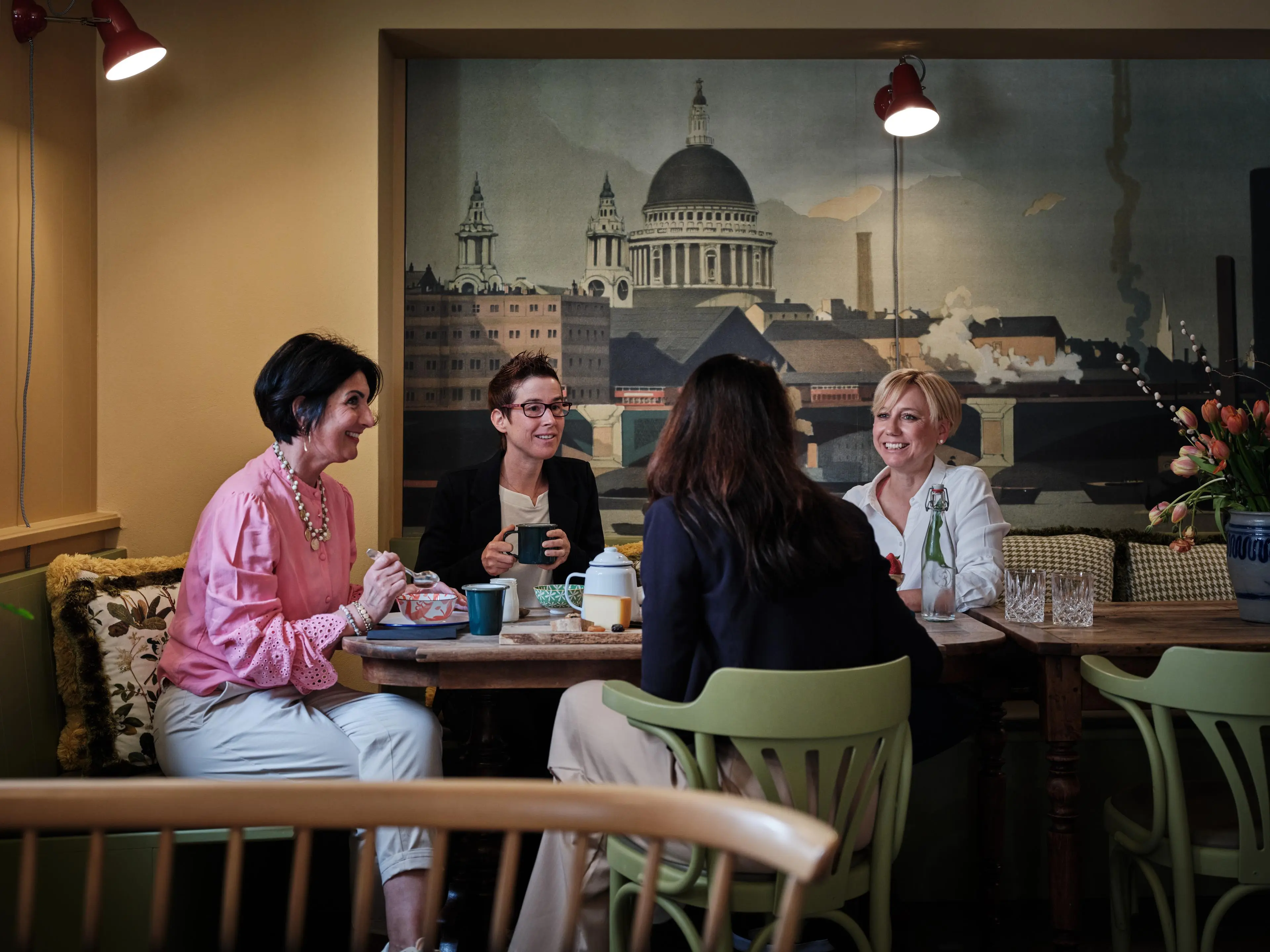
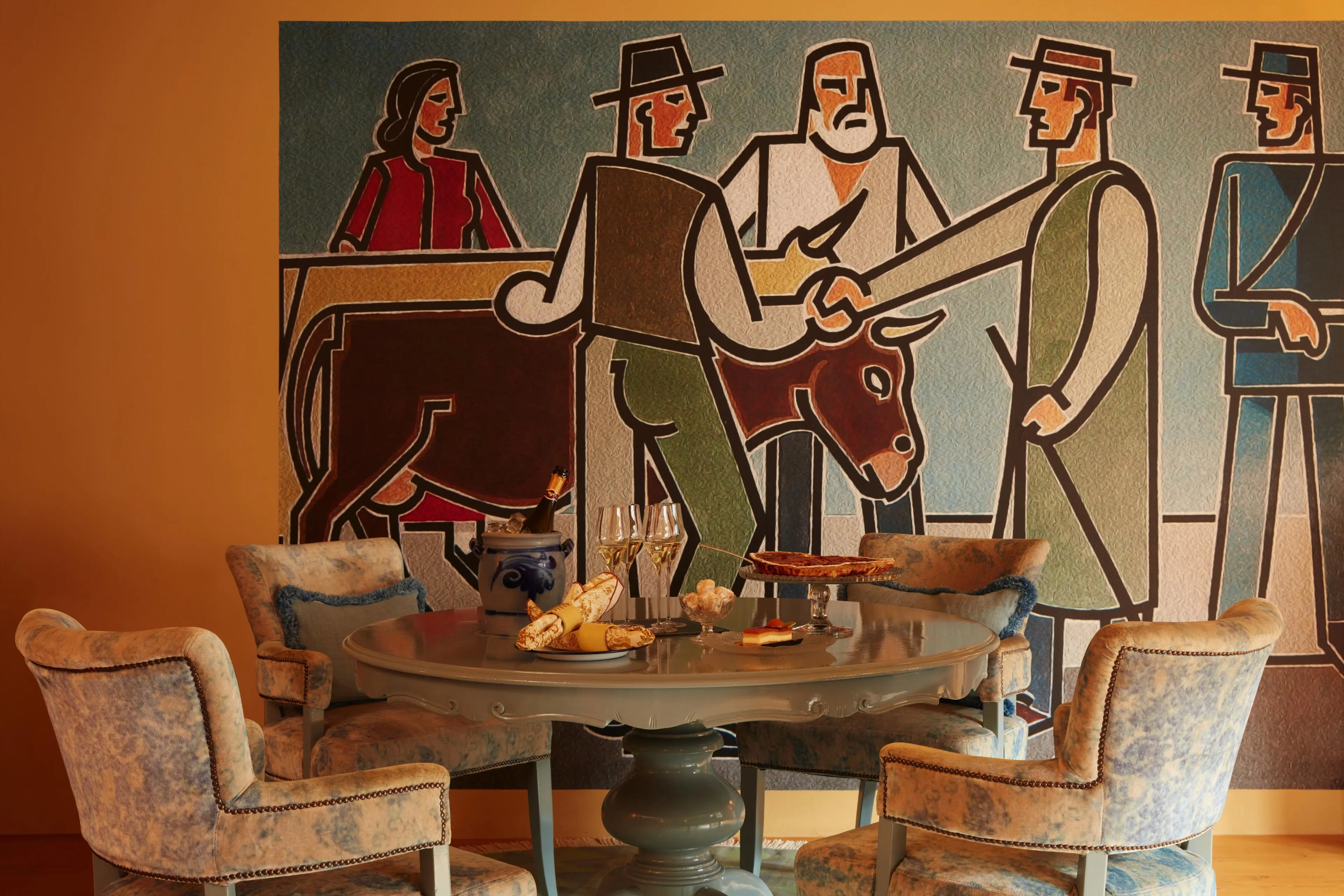
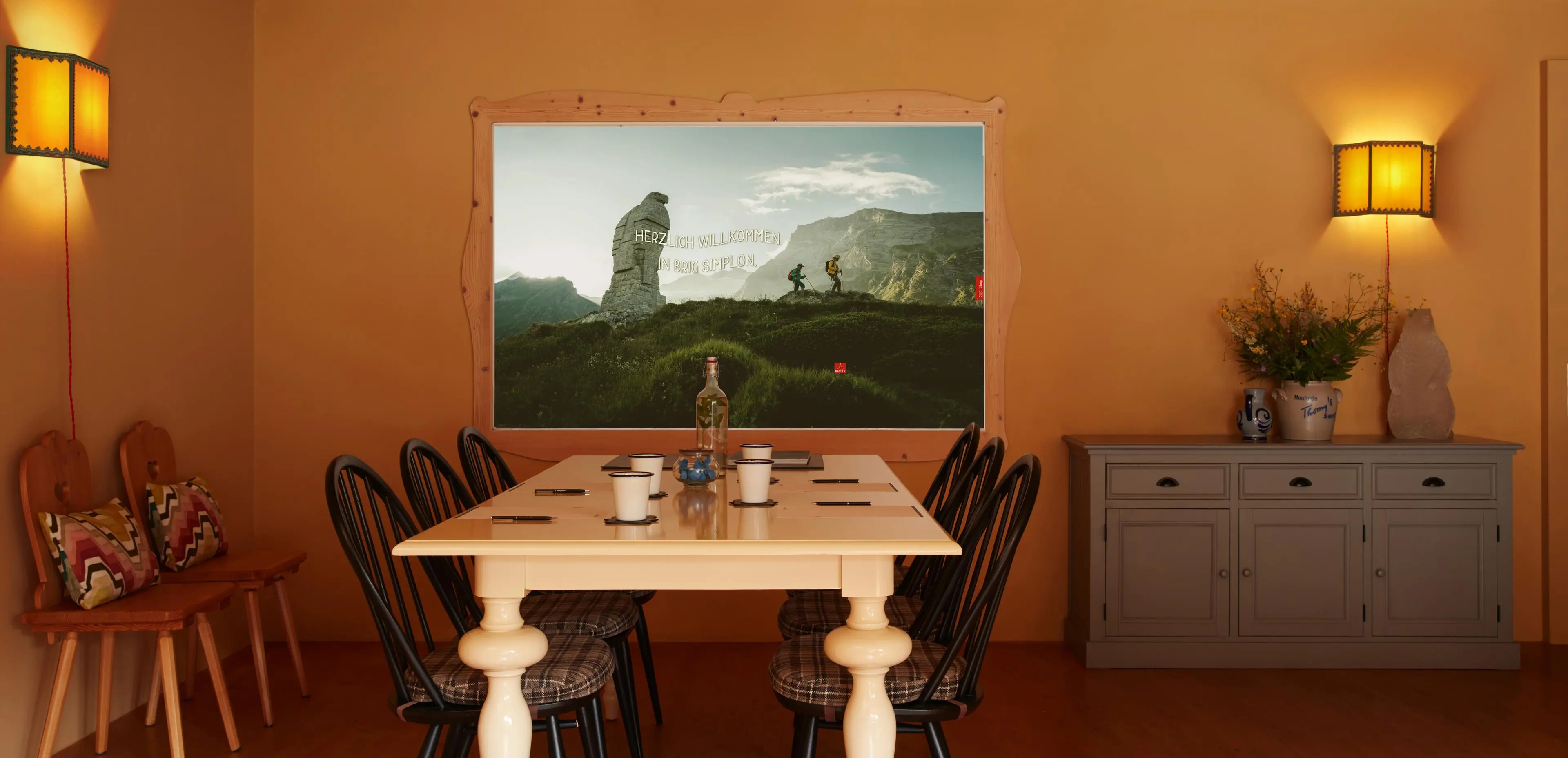
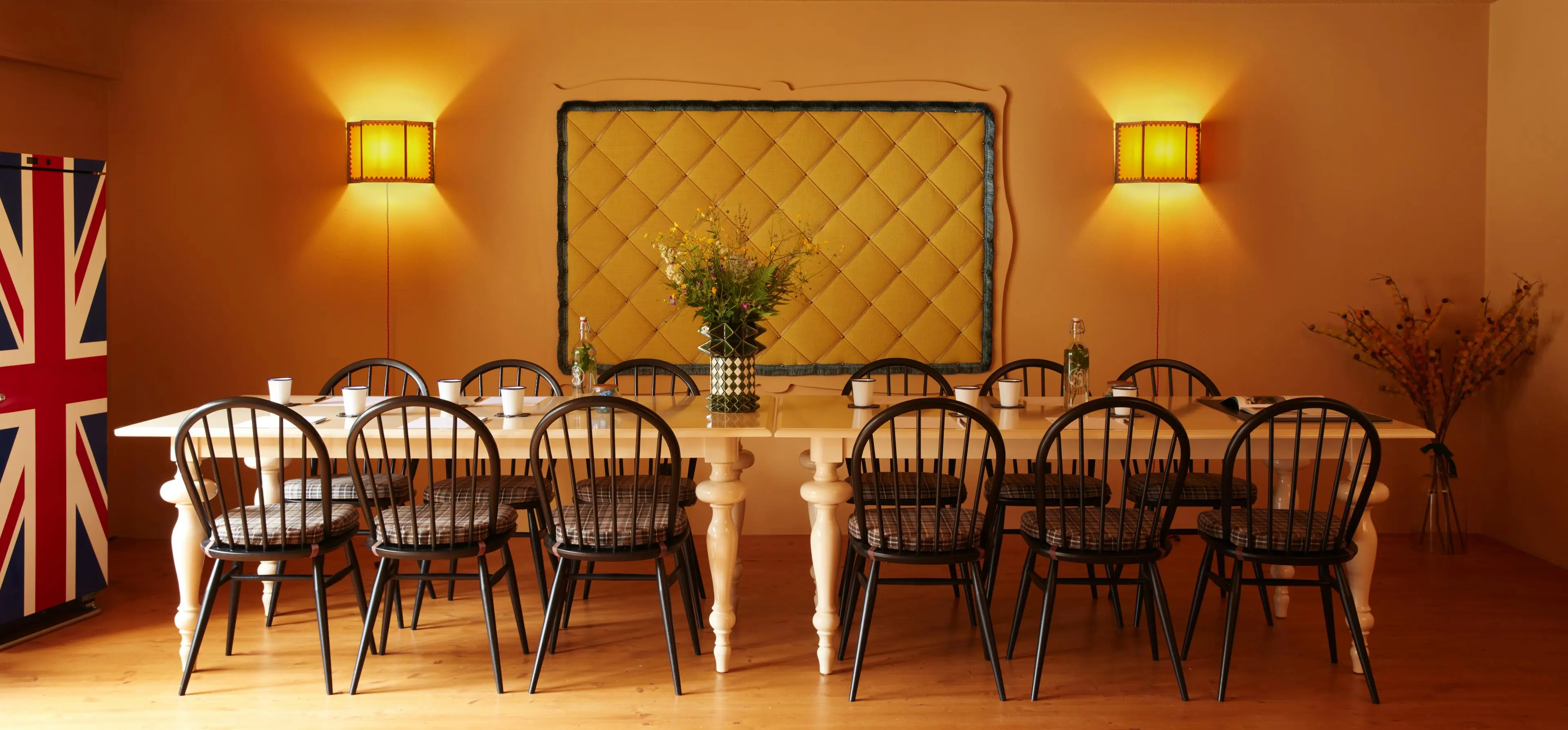
The 46 m² seminar room “Otto’s Stuba”, named after Brig artist Otto Pfänder, combines character, comfort, and technology. A large wall mural creates atmosphere – while the interactive whiteboard, Apple TV, and high-speed Wi-Fi provide the necessary connection to the outside world. Seating adapts to your plans: seminar style (up to 20 people) or theatre style (up to 30 people).

All this in the heart of Valais – in an environment that inspires rather than distracts.

Perfect for

  • Seminars & creative workshops
  • Executive retreats & team off-sites
  • Birthday celebrations & wine tastings
  • After-work apéros & intimate weddings

More room for great ideas
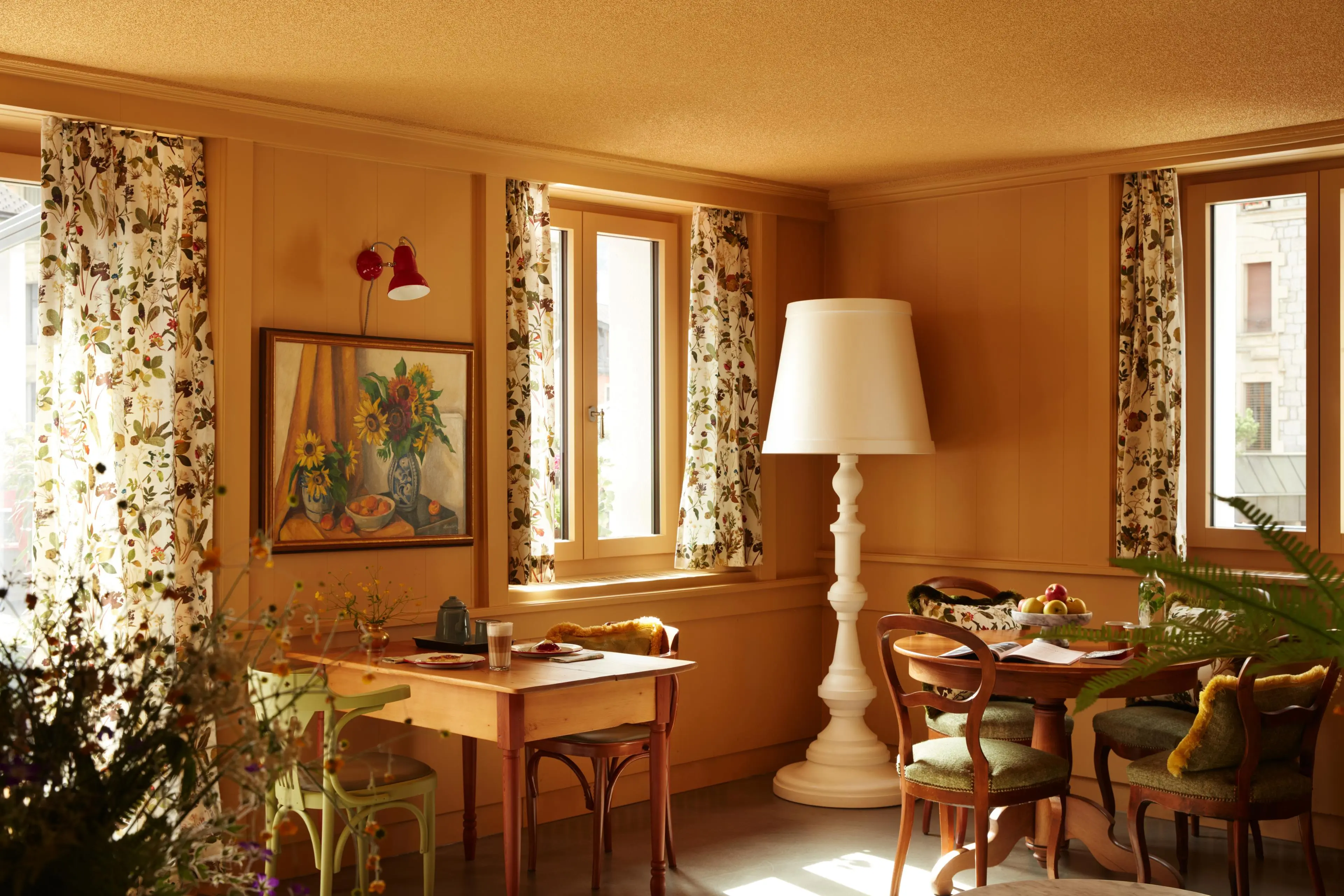
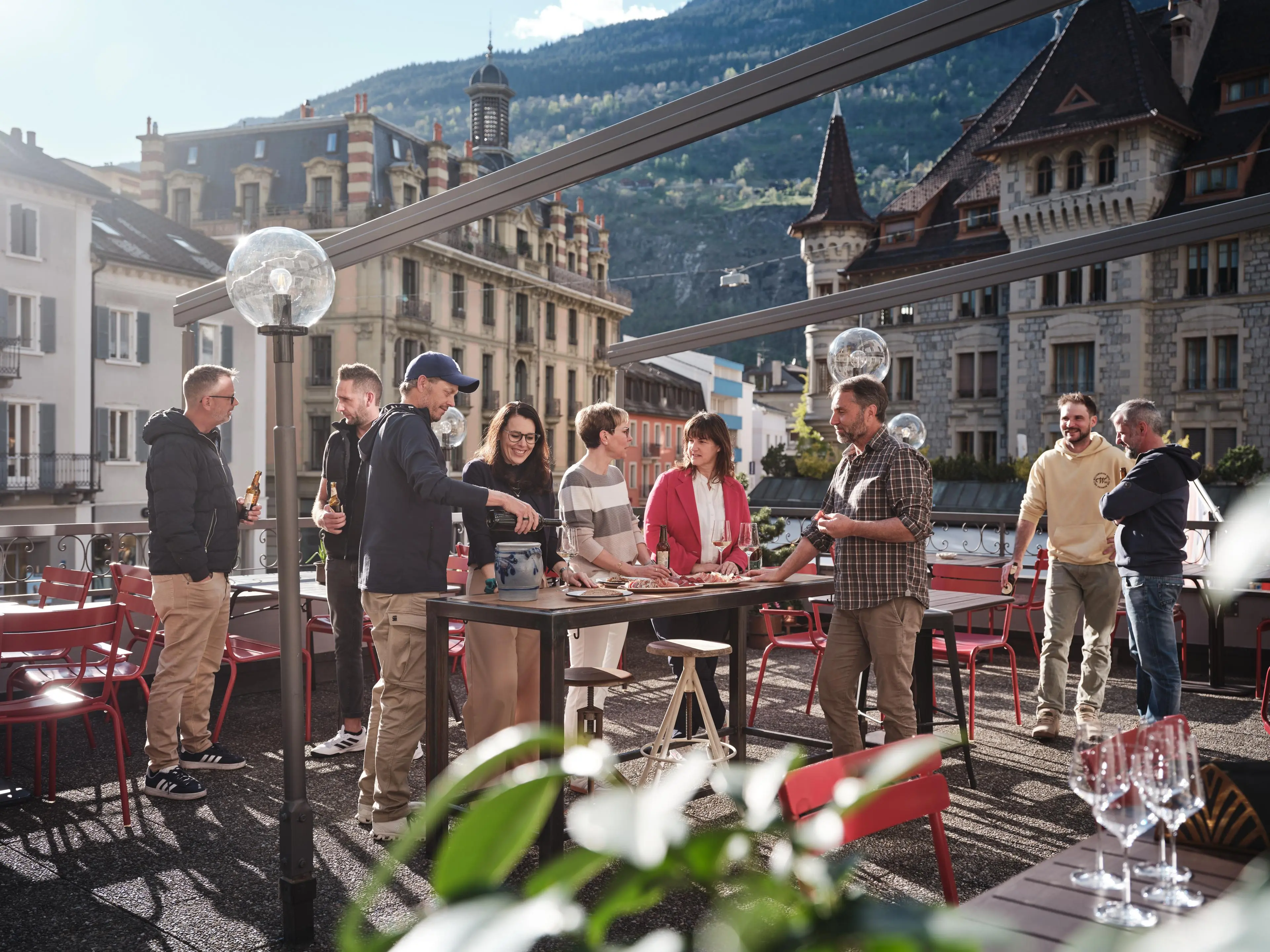
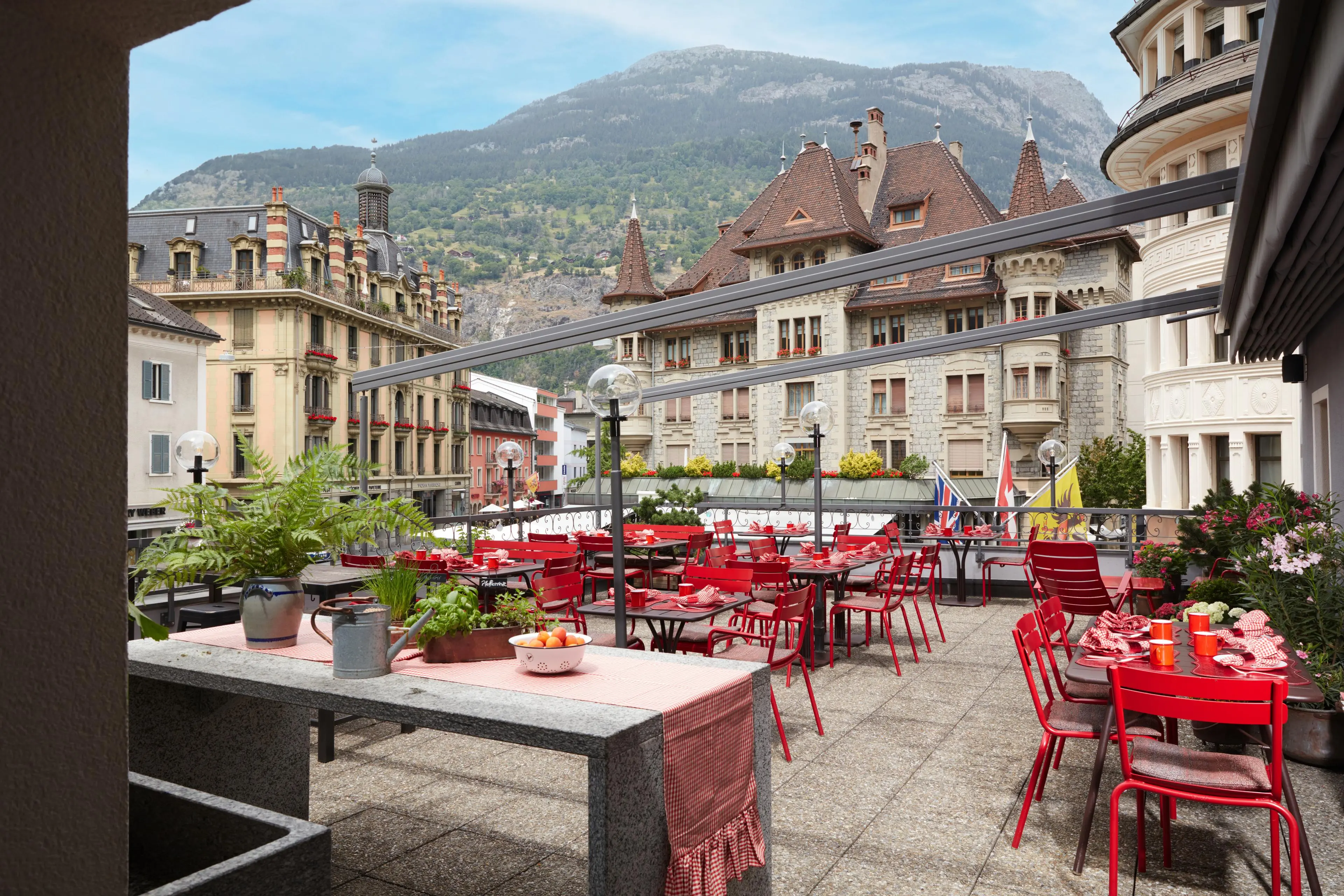
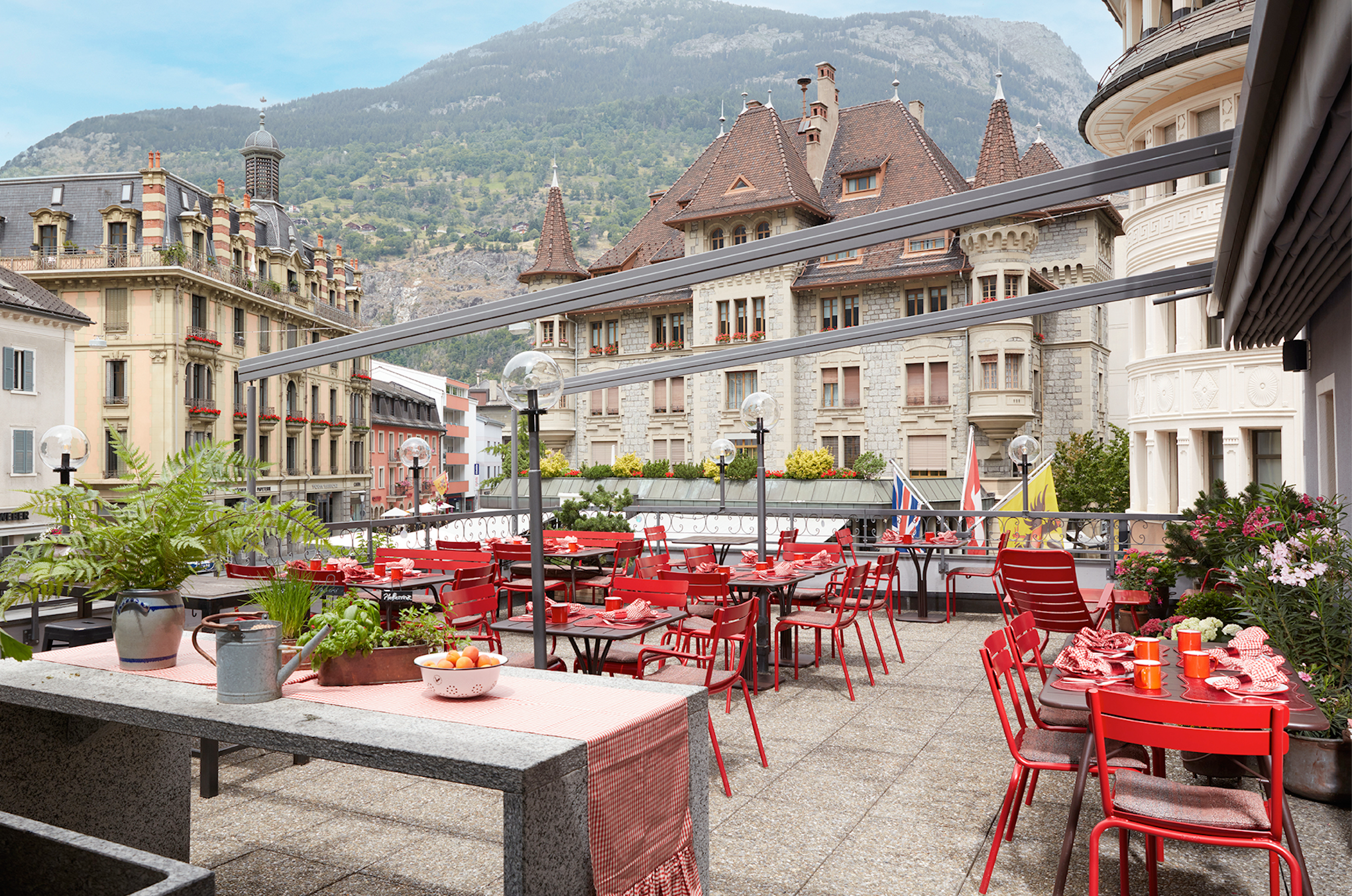
On the same floor as Otto’s Stuba, you’ll find our Wohnstuba and our big terrace – ideal for breakout sessions, group work, or simply a relaxed pause in the fresh mountain air.

Culinary experiences, just the way you need them
Special wishes? No problem – together with our catering partners we create an experience that suits you and your event: regional, high-quality, and tailored to your needs.

Seating in the seminar room at the Hotel de Londres

Sample Package: Executive Retreat for 10 People

  • Meeting room with full technical setup
  • Two coffee breaks
  • Lunch & dinner (2- and 3-course menus, incl. drinks & Valais wine)
  • Overnight stay in single room with breakfast, all taxes included

From CHF 425.– per person, incl. VAT

An all-inclusive package – clear, high-quality, and flexibly adaptable to your needs.

Our Flexible Room Rates

Otto’s StubaPrice (CHF), incl. VATDetails
Minimum booking
(2 hours from 17:00)
105.-
Each additional hour: 40.-

Includes Valais mineral water and meeting infrastructure

Half day
(08:00 – 12:00 or 13:00 – 17:00)
170.-Includes Valais mineral water and meeting infrastructure
Full day
(08:00 – 17:00)
300.-Includes Valais mineral water and meeting infrastructure
Private events300.- full day
170.- half day
Up to 4 hours = half day rate
More than 4 hours = full day rate

Wohnstuba

Otto’sStuba

Terrasse

Catering and cooking services

Just a few details – we’ll take care of the rest.

Personal Information

Event Information

Catering & Breaks

If you’re planning lunch or dinner – we’ll be happy to arrange it.
We don’t have a restaurant, but we work with reliable catering partners.
Or you can decide spontaneously – many restaurants are within walking distance.

Rooms

If you or your guests would like to stay overnight – we’ll be happy to book the necessary rooms.

Notes and special requirements

Q&A & Checkliste

How to plan a business retreat in Valais

Executive retreat, management retreat, offsite meeting, company retreat in the Alps or team offsite – call it what you like. Our checklist helps you plan it, so nothing important gets forgotten without scheduling every last minute.

Objectives

  • What should the retreat achieve?
  • What decisions need to be made?
  • How will we know whether the retreat has been successful?

Participants

  • Who needs to be there?
  • How large should the group be?
  • Does everyone need to attend, or would a smaller group make more sense?
  • Do any participants have particular requirements – for example, limited mobility, allergies or other needs that should be considered when choosing rooms, spaces or activities?

Duration & date

  • Is one day enough, or will you need one or more overnight stays?
  • Is there enough time for work, breaks and informal conversation?
  • Is the timing right for the team or company?
  • By when do participant numbers, rooms, meals and the supporting programme need to be confirmed – and what are the cancellation deadlines?

Agenda

  • Are the most important topics clearly prioritised?
  • Do focused working sessions alternate with proper breaks?
  • Is there time for fresh air, movement or simply a break outside?
  • Is there time for enjoyment too – a good lunch, coffee outside or an apéro together?
  • Has some free time deliberately been left in the programme?
  • Is there room for conversations that aren’t on the agenda?

Facilitation

  • Can someone from within the team facilitate impartially?
  • Or would an external facilitator be better?
  • Who keeps an eye on time, structure and outcomes?
  • What will the facilitator need on site – flipcharts, pinboards, facilitation cards, pens, paper or prepared printouts?

Hotel & venue

  • Does the hotel or venue have the final agenda – including start times, breaks, meals, room changes and the end of the day?
  • Is there a dedicated contact at the hotel – including during the retreat?
  • Have all booked services and special requests been reconfirmed?
  • Does the hotel know when participants are arriving and when to expect the first guests?
  • Are the cancellation terms and important deadlines clear – and are the key dates in the calendar of the person responsible for the retreat and venue booking?
  • Is it clear what can be adjusted flexibly if the schedule changes at short notice?
  • Have external partners such as caterers, the private chef, facilitator or activity providers been coordinated with the hotel?

Location & seminar room

  • Seminar hotel, city hotel or another type of retreat venue?
  • Is the seminar room the right size for the group?
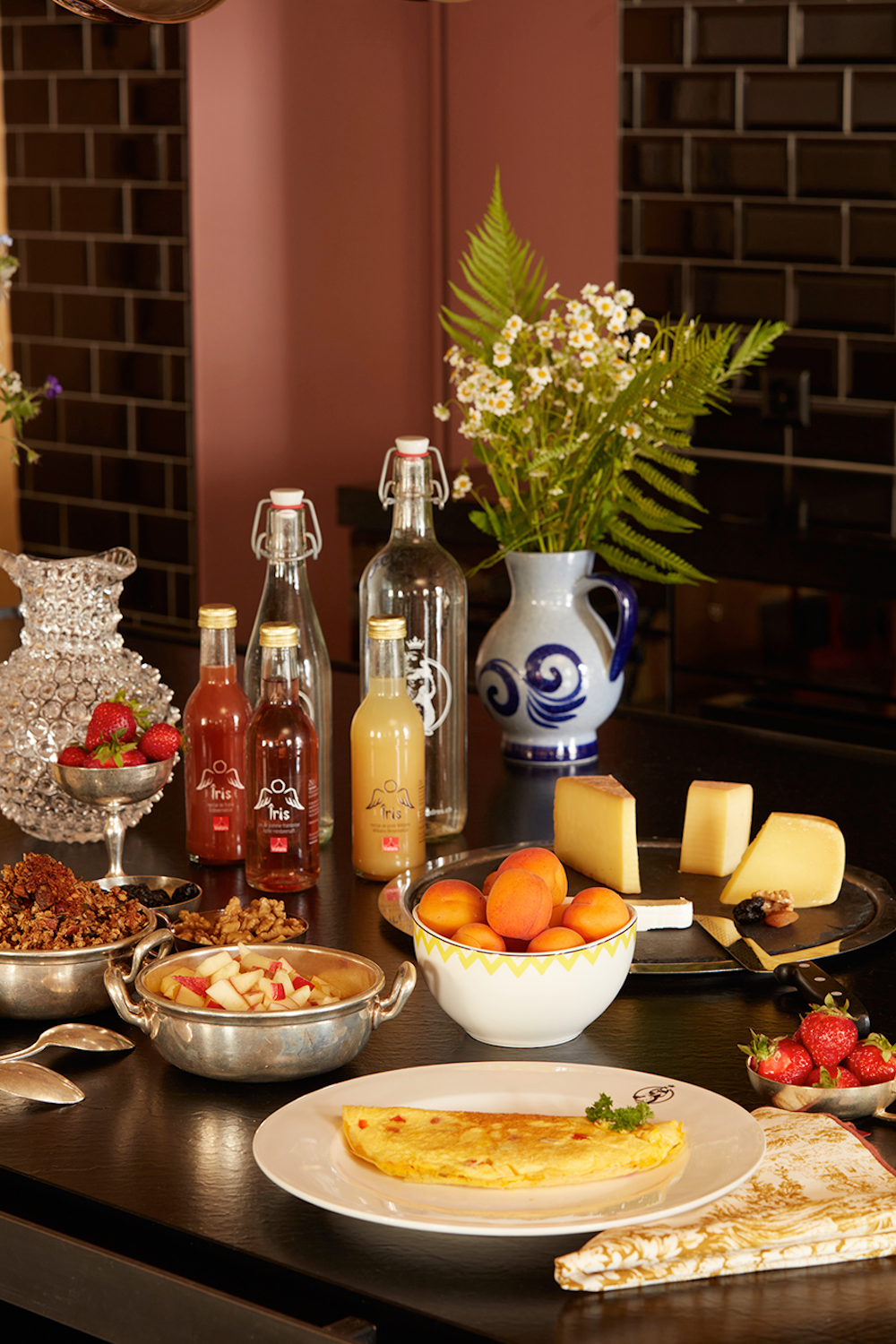
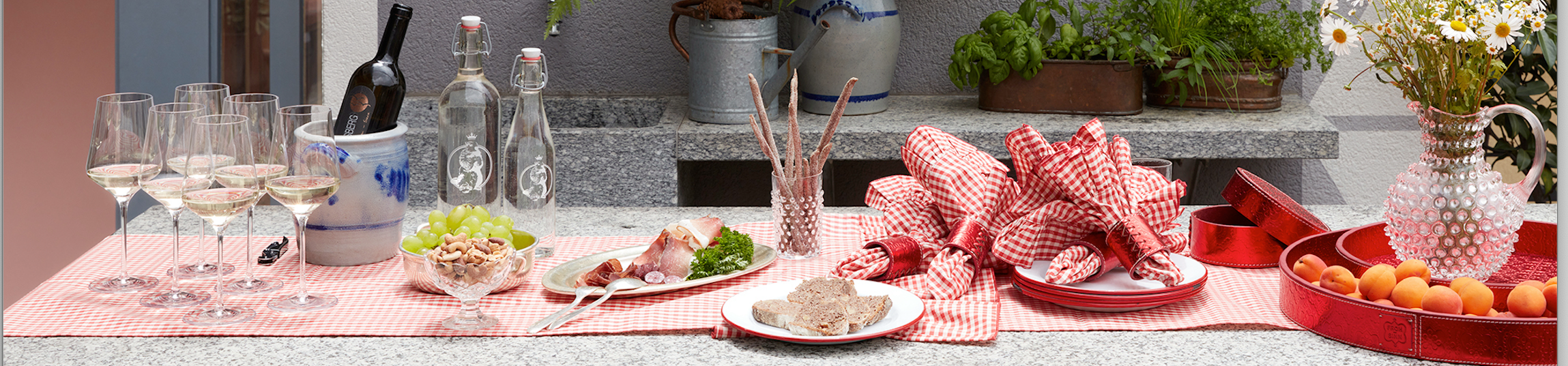
  • What should be on the seminar table besides still and sparkling water? Nuts, something sweet, fresh fruit – or perhaps something with a sense of humour, such as a stress ball?
  • Is there natural daylight, reliable Wi-Fi and the necessary technology?
  • What technology will actually be needed – screen, projector, video conferencing, speakers or the right adapters?
  • What room layout is needed – one large table, U-shape, group tables or space for breakout work?
  • Are there different workspaces for group work and quieter moments?
  • What is the atmosphere of the rooms like – will people still feel comfortable after several hours?
  • Do the design and furnishings support different ways of working – from a conversation around the table to smaller group work?

Accommodation

  • Are there enough rooms for all participants?
  • Can work, accommodation and time together all happen in one place?
  • Does that make it easier for the group to stay together outside the working sessions too?
  • Are some participants arriving earlier or leaving later – and have these different dates been taken into account in the room bookings?
  • Will the company book the rooms centrally, or will each participant make their own reservation?

Food & enjoyment

  • What food and refreshments are needed during the working day?
  • What should the coffee breaks, lunch and apéro look like?
  • Should coffee breaks, lunch and apéro be served at fixed times, or should the schedule remain a little flexible?
  • Are there allergies, vegetarian or vegan requirements?
  • Would you like to bring in a local caterer or private chef for a special meal?
  • Is dinner together planned at the hotel or elsewhere?
  • Would a wine tasting or another tasting experience be a good addition to the retreat?

Team-building & supporting programme

  • Which team-building activities suit the group?
  • Should there be an outdoor activity – more of a mental challenge or a physical one?
  • Would a tasting suit the team – wine, beer, spirits or something culinary?
  • Could cooking together with a private chef be an option?
  • Is there also time with nothing organised at all?
  • Is there a wet-weather alternative for outdoor activities – and does it need to be booked in advance?

Communication before the retreat

  • Does everyone know when and where the retreat is taking place?
  • Have the travel arrangements, meeting point, start and finish times been clearly communicated?
  • Has everyone received the final agenda?
  • Does each participant know what they need to organise themselves – for example, their hotel room, public transport ticket or individual travel arrangements?
  • Is it clear what the company will organise and pay for, and what participants need to book or pay for themselves?
  • Does everyone know what they need to bring or prepare?
  • Have any clothing or equipment requirements for planned activities been communicated?
  • Does everyone know who to contact with questions or if something changes at short notice?
  • Is there a clear way to communicate last-minute changes to everyone?

Travel

  • Is the retreat venue easy for all participants to reach?
  • How long is the journey by train?
  • Can participants travelling from different regions get there easily?
  • How will participants get from the station to the venue – on foot, by public transport or is a transfer needed?
  • Are any participants driving – and are enough parking spaces available or reserved?

Budget

  • Accommodation
  • Seminar room and technology
  • Food, drinks and catering
  • Team-building activities and supporting programme
  • Facilitation
  • Travel to and from the retreat
  • A small gift or thoughtful touch for participants
  • Is there a small contingency for last-minute changes – for example, additional participants, drinks, technology or changes to the supporting programme?
  • Is it clear which costs the company will cover, how extras will be charged and who should receive the final invoice?

Follow-up

  • Who will take notes and record decisions and outcomes?
  • Have responsibilities and next steps been agreed?
  • When will progress on the agreed actions be reviewed?
  • Should there be a follow-up meeting – for example, one month after the retreat?

Ultimately, good planning should clear your head – because the important things have already been sorted before the last-minute rush begins.


Final thought

Good retreats don’t simply make for better meetings.

They create space:

  • for clarity
  • for honest conversations
  • for new perspectives
  • for a shared sense of direction

Because the most important decisions are rarely made between two meetings. They happen when people genuinely have the time to think together and listen to one another.

What does it feel like to come together at Hotel de Londres Brig, exchange ideas and move forward together? We think our guests say it best.


“A space for creative thinking. As a concept and creative agency, we like places that are different and inspiring. For us, the Hotel de Londres Brig is exactly that kind of place. Its distinctive atmosphere and the intriguing mix of guests and club members give the space a character all of its own. A place to feel at ease, where thoughts flow, ideas take shape and there is room for creative thinking.”

Jonas Hauser
Owner and Creative Director, metaloop concept and creative agency


“From the moment you arrive, you feel at home – the warm atmosphere, great location, immaculate rooms and beautiful terrace create the ideal setting for meetings that are both focused and enjoyable. We particularly appreciate the modern, reliable technology, the personal attention, excellent food and the consistently friendly and helpful team. This all-round package makes your little gem the right choice for us time and again.”

Dominic Volken
Head of Resources and Staff, lic. iur. LL.M.
Swiss Federal Gaming Board ESBK


“We particularly appreciate the welcoming atmosphere, the special location and the wonderful terrace. The convenient location, friendly and professional service and facilities are also key factors for us. For a small group, Hotel de Londres Brig is the perfect choice.”

Nadin Hellmuth
Admin. Assistant Advanced Synthesis (Bioconjugates)
Lonza Visp - Switzerland

Team-building in the mountains doesn’t have to mean turning the day into an adventure programme. And a team offsite in the Alps doesn’t need every free hour filled with activities.

In Valais, some of the best options are often close at hand: get outside, get moving, experience something together, then return to the table with a slightly different perspective.

Team-building activities could include:

  • a hike or walk together in the mountains
  • a simple outdoor activity as a change from the working sessions
  • a Valais wine tasting
  • a meal together featuring regional produce
  • time at the hotel or in the bar – with nothing organised at all

The right team-building activity depends on the group and what you want to achieve with the retreat.

Not every team needs action. And not every free hour needs organising.

In the mountains, sometimes a good coffee break outside is enough. The mountains provide the backdrop; the rest often takes care of itself.

A Valais wine tasting is more than something to add to the programme once the work is done.

The agenda takes a back seat, conversations become more relaxed and, at the same time, the team gets to know a little of Valais.

A Valais wine tasting brings together:

  • regional wines and the stories behind them
  • Valais culture and enjoyment
  • time together away from the meeting room
  • informal conversations within the team
  • an experience that belongs to the place

And in Valais, you don’t have to go far. Wine is part of the landscape and part of life here.

A Valais wine tasting works well as part of a business retreat or team event: it brings together enjoyment, a sense of place and time spent together.

Regional catering brings a little of Valais to the table – whether it’s for a business retreat or a company event.

It doesn’t have to mean elaborate menus. On an intensive working day, food should taste good, provide energy and be uncomplicated.

Regional catering could include:

  • light lunches during the working day
  • regional specialities and house specialities
  • a relaxed dinner together
  • vegetarian and vegan options, as well as catering for allergies

How much does catering cost in Brig, Valais?

It depends on what you have in mind. As a guide:

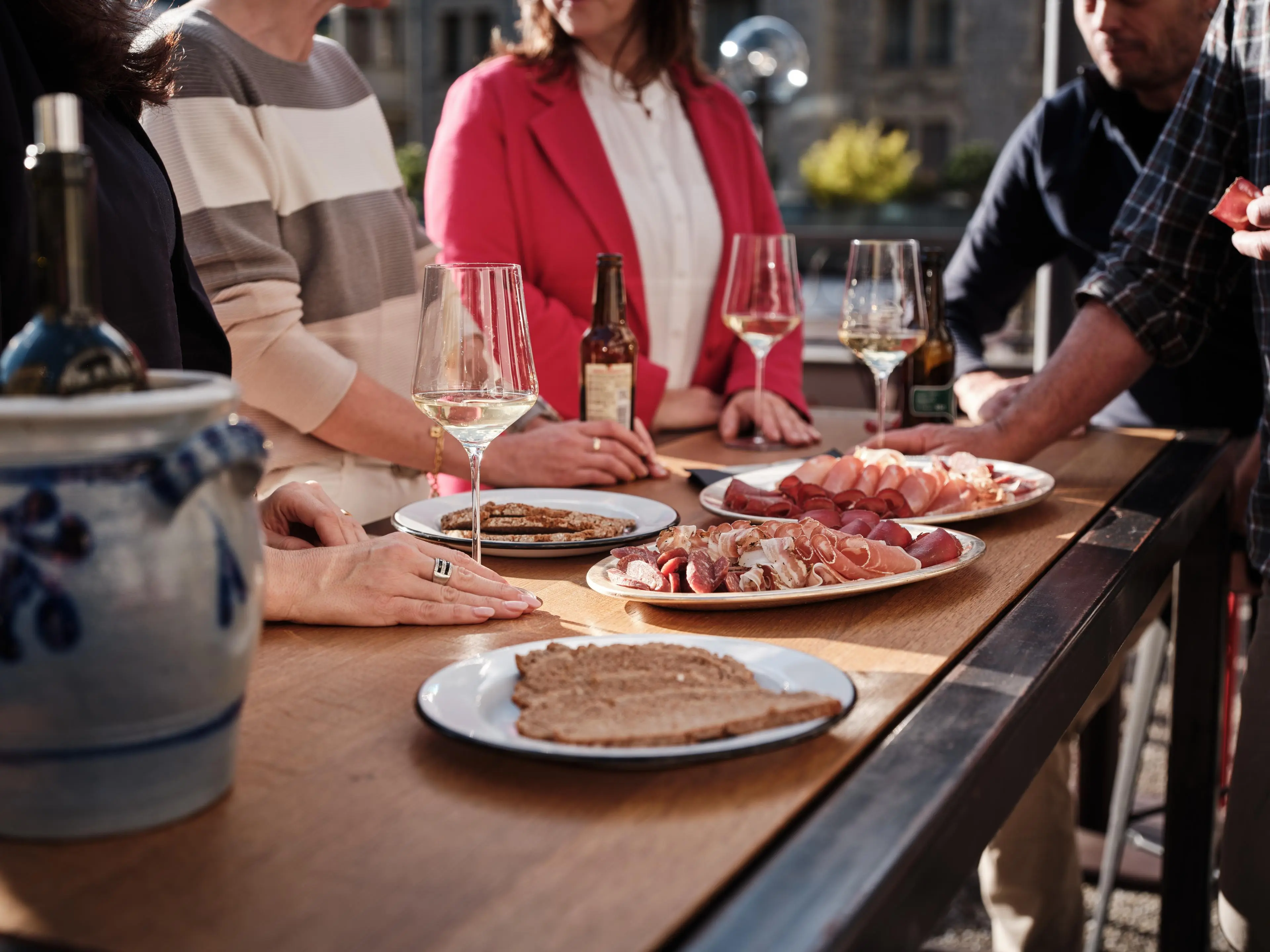
  • Valais apéro platter from approx. CHF 19 per person
  • standing lunch from approx. CHF 33 per person
  • smoker menu from approx. CHF 56 per person

How do you find good catering for a company event or business retreat?

Hotel de Londres in Brig, Valais – a boutique seminar hotel in Switzerland – places great importance on good local caterers and chooses its partners carefully. Depending on the occasion, budget and what you have in mind, there are several caterers and options to choose from.

So you don’t have to work your way through endless offers, but can choose what suits the team and the occasion.

Shared meals are as much a part of a retreat as the working sessions. Thinking often continues around the table – just a little more relaxed.

And regional catering puts a little Valais on the plate, too.

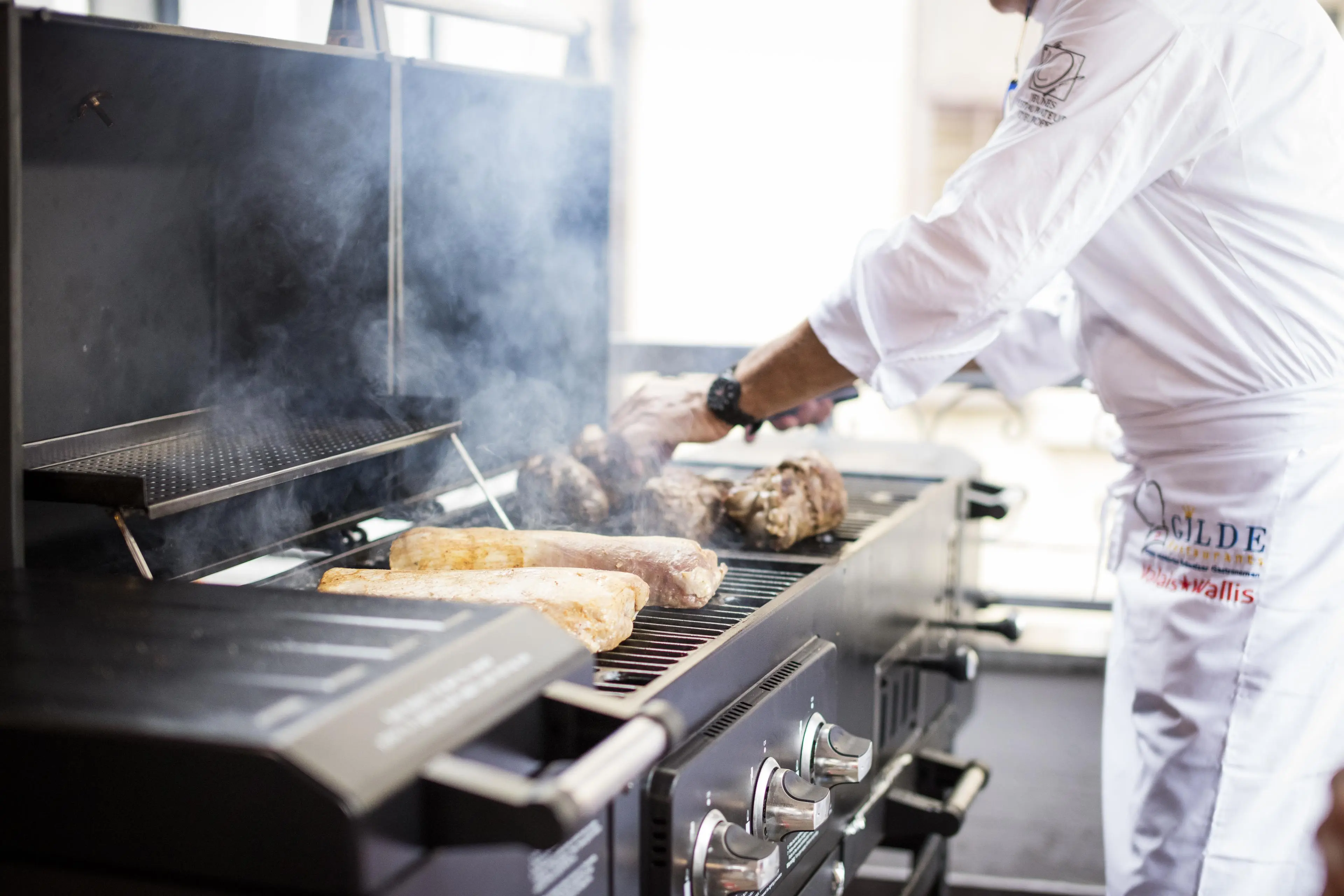
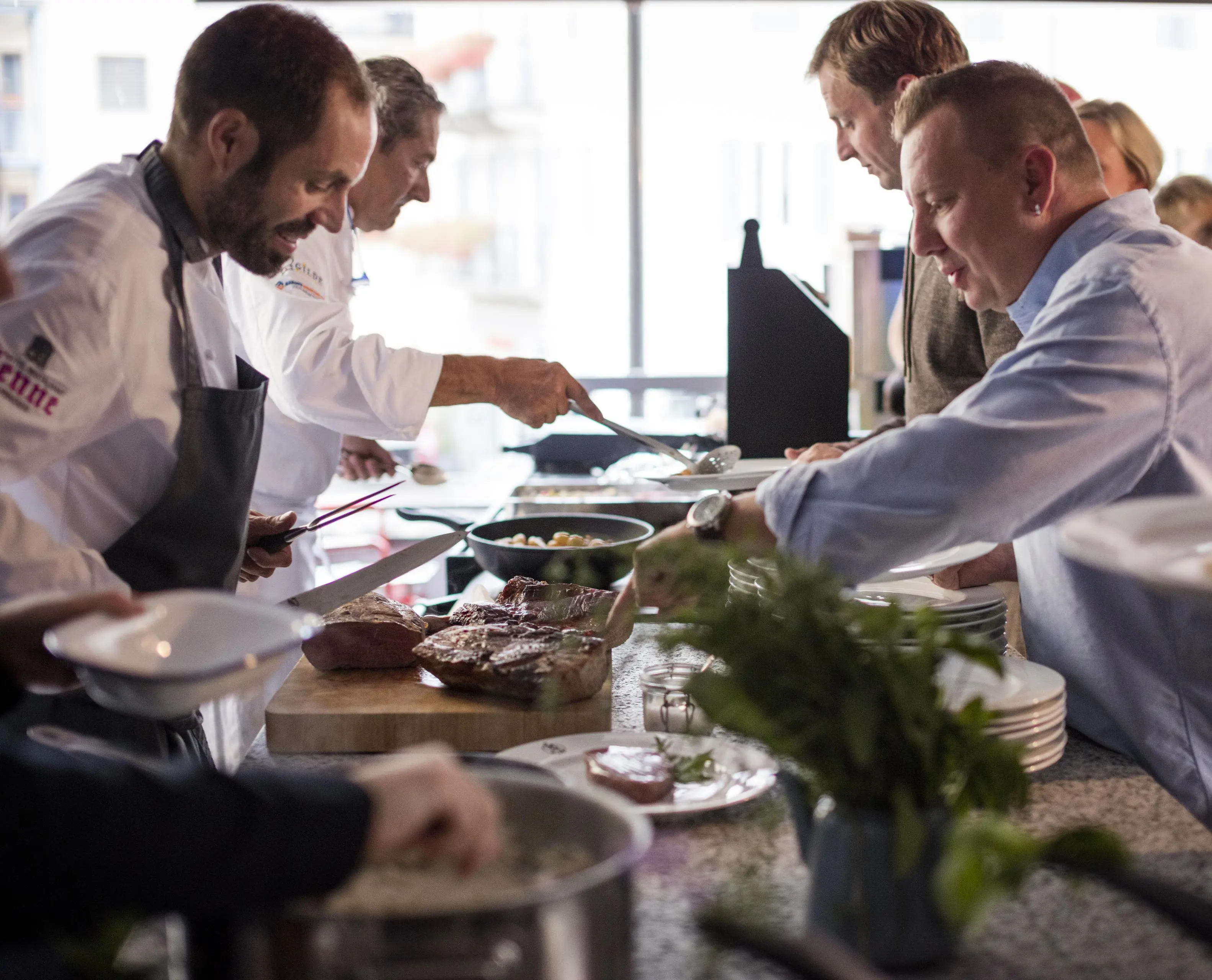
A private chef comes to where the guests are and cooks on site. For a business retreat or company event, this can turn a meal into a relaxed shared experience.

A private chef can be a good option for:

  • dinner together after the working sessions
  • a menu tailored to the group, with a focus on regional and seasonal produce
  • smaller groups who prefer to have the place to themselves
  • an evening where food and time together take centre stage
  • teams who deliberately prefer not to go to a traditional restaurant
  • a team event where the group cooks together, guided and supported by the chef

The advantage: there’s no need for the group to move somewhere else in the evening. Everyone stays together, the working day is over and there are no distractions from changing location or other restaurant guests. If you like, dinner itself can become the team event: prepare, cook and then eat together, with the chef there to guide and help.

At Hotel de Londres in Brig, a private chef can be an alternative to traditional catering or a restaurant visit, depending on the occasion and what the team has in mind. Our own smoker on the large terrace overlooking the car-free town square is particularly well suited to it.

Seminar hotel or city hotel? It depends on what the team wants to achieve with its business retreat.

A traditional seminar hotel usually offers plenty of infrastructure and well-established processes. It is often larger, with several seminars, conferences or events taking place at the same time. A smaller city hotel can offer a different setting:

  • smaller scale and fewer events taking place at the same time
  • more privacy and peace for your own team
  • personal attention rather than a traditional seminar operation
  • workspaces, accommodation and meals under one roof
  • short distances – both within the hotel and around town
  • restaurants, culture and activities right on the doorstep
  • greater flexibility in the daily schedule, food and supporting programme

For smaller teams and SMEs in particular, that can be appealing. They often don’t need a large conference centre, but rather a place where focused work, accommodation, meals and time together come together without fuss.

Hotel de Londres in Brig, Valais, is a city hotel rather than a traditional seminar hotel. With its individually designed workspaces, 18 rooms and central location, it is particularly well suited to smaller groups who like to have some privacy during their business retreat. Brig is also an ideal hub: Zurich, Bern, Basel and Milan can all be reached in around two hours. Teams from different regions can therefore come together easily – while still holding their company retreat in the heart of the Valais Alps.

What makes a top seminar hotel in Switzerland for SMEs?

Not necessarily the number of seminar rooms. What matters is whether the hotel suits the size of the team, the purpose of the retreat and the way the group wants to work.

For an SME, short distances, personal attention and flexibility can matter more than a long list of conference technology.

In the end, the best seminar hotel is the one that suits the team – even if it happens to be a city hotel.

The most important conversations rarely begin with within first hour. 

A good retreat needs time:

  • to step out of operational mode
  • to build trust
  • to encourage open discussions
  • to think strategically

That is why overnight retreats are often far more effective than traditional one-day workshops.

Often, the most valuable conversations happen:

  • at dinner
  • during a walk in nature
  • between two sessions
  • or late in the evening at the bar

Not in the official meeting room.

In practice, one to two days have proven ideal for many teams: long enough for depth, short enough to maintain focus.

A retreat needs a clear purpose.


Without a shared expectation, even the best agenda becomes ineffective.

Typical objectives include:

  • strategic alignment
  • decision-making
  • leadership alignment
  • team development
  • innovation and ideation
  • change management
  • culture and values work
  • annual planning or budgeting

What matters is not the number of topics, but the clarity of priorities.

A good retreat rarely solves everything.
But it creates focus on what matters most.

A retreat creates a different way of thinking.

In everyday business, teams often only react to:

  • emails
  • appointments
  • operational challenges

A retreat creates distance from that.

This often leads to:

  • better conversations
  • more open discussions
  • new perspectives
  • stronger trust
  • decisions instead of endless feedback loops

Less presentation.
More thinking.

Less information.
More clarity.

Environment influences behaviour.

People think differently when:

  • they have peace and quiet
  • they feel comfortable
  • they are not constantly interrupted
  • the atmosphere creates trust
  • they are attentively supported

The right location supports:

  • concentration
  • openness
  • creativity
  • stronger team connection

When looking for a seminar room in Valais for a business retreat, it is worth considering more than just infrastructure and technology. Atmosphere, places to retreat to and the surroundings matter just as much.

It sets the tone for the entire experience.

At Hotel de Londres, meeting planners and their guests particularly appreciate the combination of easy accessibility and an atmosphere that is rarely found in traditional conference hotels.

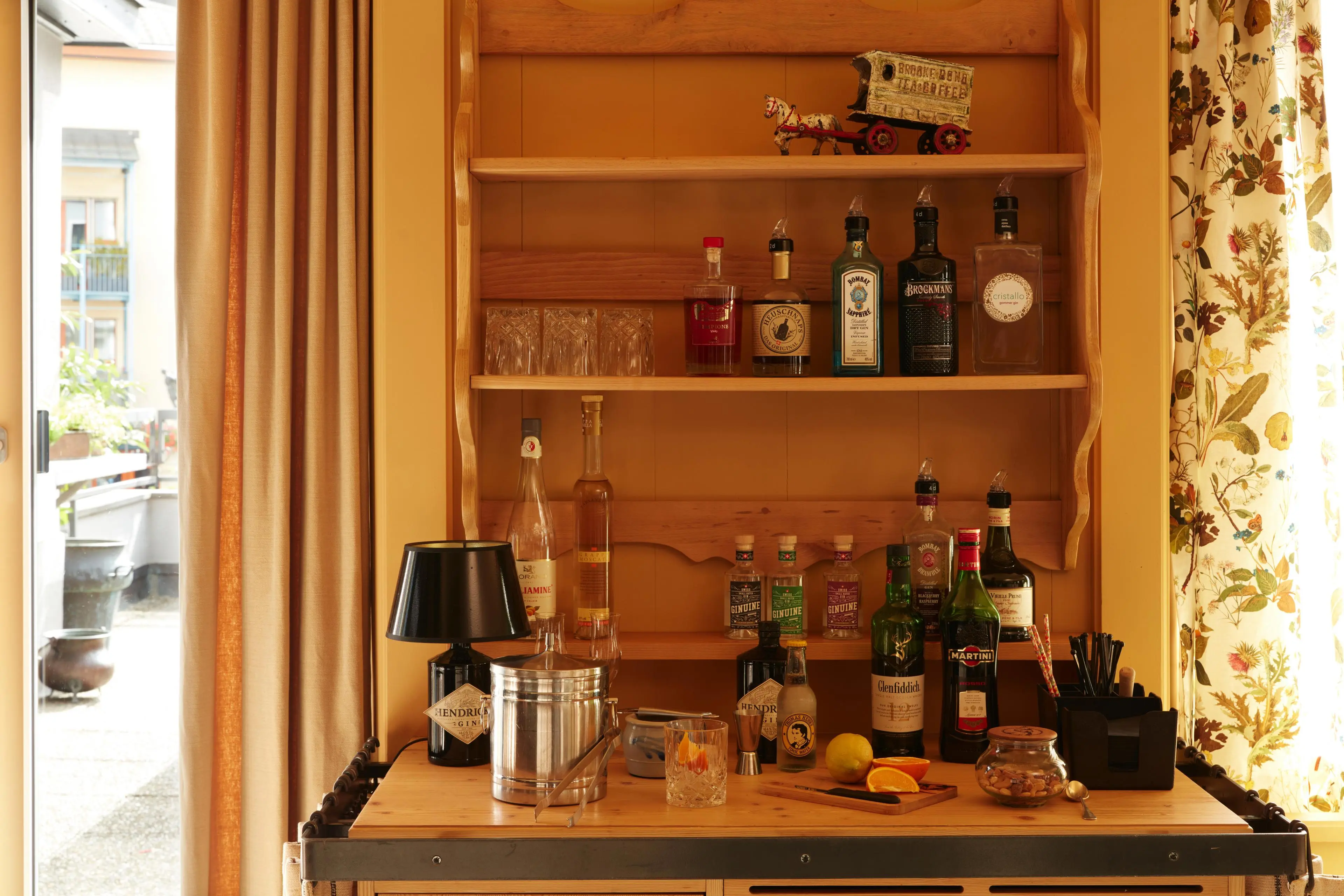
From much of Switzerland, you can reach Brig in about two hours. Once you arrive, focused meetings, conversations in the Wohnstuba and breaks on the sun terrace flow naturally from one to the next. And at our 24-hour Honesty Bar, something many teams already know often becomes clear: the best conversations do not always happen in the meeting room, but when people have the time to listen and enjoy each other’s company without feeling rushed.

Perhaps it is the house. Perhaps it is the mountains. Most likely, it is both.

Distance creates perspective.

The mountains offer something that is often lost in everyday life:

  • Peace.
  • Fewer distractions.
  • Fewer interruptions.
  • More focus.

Many teams experience outside the office:

  • more open discussions
  • better concentration
  • greater creativity
  • stronger human connection

Not despite the environment — but because of it.

In Brig, the gateway to the Alps, with 45 four-thousand-metre peaks on the doorstep, it often takes no more than a glance outside to put things back into perspective.

Against this backdrop, some challenges suddenly seem a little smaller. What truly matters becomes much clearer.

That is precisely why a company retreat in the Alps can be more than a meeting in a different location. It creates the space for a change of perspective — something that is all too often missing in the pace of everyday life.

Smaller groups usually work more effectively.

In many retreats, the ideal group size is between 4 and 12 participants.

Larger groups often lead to:

  • passive participation
  • less openness
  • longer discussions
  • unclear decisions
  • reduced genuine involvement

The more sensitive or strategic the topics, the more important a manageable setting becomes.

Quality rarely comes from size.

An effective retreat needs structure — but not overplanning.

The best formats combine:

  • focused work sessions
  • open conversations
  • reflection time
  • shared meals
  • intentional breaks
  • lightness and shared experiences

What matters is a clear flow:

  • Which topics are currently most important?
  • Which decisions need to be made?
  • What should be different by the end?

A full calendar does not automatically create a good retreat.

Often, the most valuable insights emerge in the quieter moments in between.

Food directly influences energy, concentration, and mood.

Especially during intensive working days, the culinary concept becomes an important part of the overall experience. Food and drinks can support focus, improve mental performance, reduce stress, and restore energy. As the saying goes, we eat with our eyes first — thoughtful presentation contributes to both the atmosphere and a sense of wellbeing.

What works well:

  • light lunches
  • high-quality regional products
  • seasonal cuisine
  • balanced menus
  • uncomplicated comfort food in the evening

Shared meals often create exactly the conversations that daily business leaves little room for — more personal, more open, and beyond the agenda.

It is also essential to consider:

  • allergies
  • dietary preferences
  • individual needs

Thoughtfulness is often reflected in the details.

The most common reasons are surprisingly similar:

  • no clear objective
  • too many topics at once
  • lack of decisions
  • overloaded agendas
  • the wrong participant mix
  • no follow-up

Many retreats create discussions — but no direction.

A successful retreat needs:

  • focus
  • priorities
  • clarity
  • accountability
  • trust
  • team cohesion

Fewer topics often lead to better outcomes

Not always. But it often helps significantly.

External facilitation creates:

  • neutrality
  • structure
  • focus
  • stronger discussion leadership

Especially in situations involving:

  • conflicts
  • strategic decisions
  • change processes
  • leadership topics

an external facilitator can make a critical difference.

Because great facilitation is not about providing answers.

It is about making the right conversations possible.

The real challenge often begins after the retreat.


Back in everyday work, teams are quickly overtaken again by:

  • meetings
  • emails
  • operational topics
  • old habits
  • endless coordination loops
  • unspoken hierarchies
  • lack of follow-through
  • responsibility being pushed upward again
  • day-to-day business taking over

That is why it requires:

  • clear ownership
  • concrete next steps
  • shared priorities
  • consistent follow-up
  • regular check-ins
  • accountability

A good retreat does not end when people leave.

It ends with implementation afterwards.

No.

A team event creates shared experiences.
A retreat creates space for conversations, reflection, and shared responsibility — and in doing so, strengthens relationships.

Both can be valuable.
But their purpose is different.

A good retreat combines:

  • human connection
  • honest exchange
  • strategic thinking
  • shared time away from daily routines

That is exactly where its strength lies.

Retreats are especially valuable during phases of:

  • change
  • growth
  • uncertainty
  • strategic repositioning

For example:

  • before important decisions
  • during leadership transitions
  • in periods of growth
  • before budgeting or strategy processes
  • after intense project phases
  • during cultural change

Often, distance is needed to see clearly again.

The right moment is usually earlier than teams think.


Final thought

Great retreats do not simply create better meetings.

They create space:

  • for clarity
  • for honest conversations
  • for new perspectives
  • for shared direction

Because the most important decisions rarely happen between two meetings.

They happen where people truly have the time to think together and listen to one another.